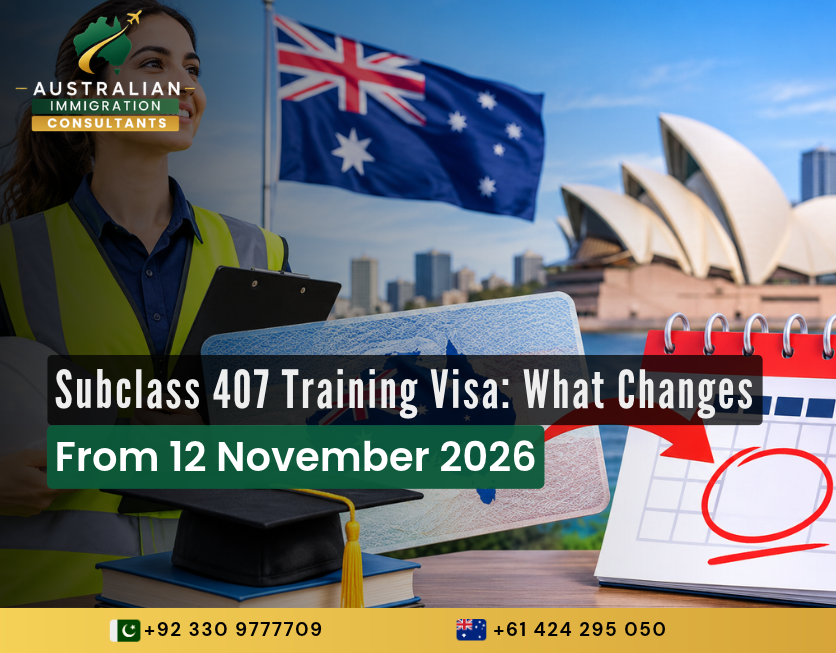
The rules for lodging a Training visa (subclass 407) have changed permanently. Applications made from inside Australia on or after 12 November 2026 are no longer valid. They are not just slower or harder. They are void.
If you are in Australia and hoping to move onto a 407, or you are an employer wanting to sponsor someone who is already here, timing and location now decide whether you can apply at all. This guide covers what has changed, what has not, and how to avoid the common traps.
Quick Summary: 407 Visa Changes in 2026
What Is the Subclass 407 Training Visa?
The 407 is a temporary visa for people who come to Australia to complete structured, workplace-based training or professional development, usually for up to two years. It is not a general work visa, and it is not meant to address labour shortages. That narrow purpose is why the government keeps tightening the rules around it.
For eligibility, English language requirements and visa conditions, see our main Subclass 407 Training Visa guide. This article covers only the 2026 reforms.
The Two 2026 Reforms
Two changes now work together:
Picture a door with two locks. The March rule controls when you may lodge. The November rule controls where you must be standing when you do.
Can You Lodge a 407 From Inside Australia After 12 November 2026?
In general, no. For applications made on or after 12 November 2026:
- You must be offshore at the time of lodgement.
- You must still be offshore when the visa is granted.
- An onshore application is invalid, even if ImmiAccount accepts it.
- A decision that an application is invalid cannot be taken to merits review.
There is one possible exception. The regulations let the Minister specify a class of people who may apply from either inside or outside Australia (though not while going through immigration clearance). Practitioners have not yet confirmed who, if anyone, is in that class, so check the latest Home Affairs guidance before relying on it.
Is There a Bridging Visa for an Offshore 407 Application?
No. Applying from outside Australia does not give you a bridging visa.
You may enter Australia on another valid visa while the 407 is processed, provided you meet that visa’s conditions. However, you must be outside the country on the day the 407 is granted. Home Affairs also advises against booking return flights around an expected grant date, since processing times vary.
Expert guidance tailored to your unique journey. Get a personalized roadmap from a Registered Migration Agent today.Navigate Your Migration
With Confidence.
The 11 March 2026 Change and Why It Still Matters
Previously, the sponsorship, nomination and visa application could all be lodged on the same day. For many onshore applicants, that meant a Bridging visa A as soon as they lodged.
The sequence is now fixed:
- The business becomes an approved Temporary Activities Sponsor.
- The sponsor lodges a training nomination and has it approved.
- Only then can the applicant lodge the 407.
If you lodge too early, the application is invalid. The visa application charge is refunded, but you have no application on foot, so you get no bridging visa and no protection for your lawful stay. Commonwealth agency sponsors still need Temporary Activities Sponsor approval but do not have to lodge a nomination.
Who Is Most Affected?
- Graduate visa (485) and other temporary visa holders who intended to switch to a 407 onshore and wait on a bridging visa.
- People whose visa is about to expire. With no bridging visa on an offshore application, mistimed travel can leave you unlawful.
- Employers and sponsors, who now need two approvals (sponsorship and nomination) before the applicant can lodge at all.
- Anyone whose training start date assumed a quick onshore lodgement. Offshore processing time has to be built into the plan.
407 Visa: Before and After 12 November 2026
Your 7-Step Action Plan
If you are in Australia and considering a 407:
- Confirm your sponsor and nomination status now. If both are already approved and a valid application can still be lodged before the cut-off, speak to a registered migration agent without delay.
- Check when your current visa expires. Depart before it ends, not after.
- Get your application ready before you leave. Have the training plan, qualifications, health and character documents, and evidence of relevant experience prepared so you can lodge as soon as you are offshore.
- Plan where you will stay. You must remain offshore until the visa is granted. You can return on another valid visa in the meantime, but you must leave again before the 407 decision.
- Do not count on a bridging visa. Offshore applications do not come with one.
- Allow for processing time. Avoid booking a return flight around a guessed grant date.
- Ask about alternatives. If the 407 no longer suits your timeline, a different visa may fit better.
If you are a sponsor or employer:
- Submit your Temporary Activities Sponsorship and nomination applications well ahead of the training start date.
- Keep the training plan, position description and trainee qualifications clear and consistent.
- Tell any trainee who is currently in Australia as early as possible, since the location rule directly affects them.
Common Mistakes
- Trusting ImmiAccount to reject an invalid onshore application. It may let you submit anyway, but submitting is not the same as being valid.
- Lodging before the nomination is approved. This has been invalid since March and still is.
- Leaving Australia too late. Departing after your visa has expired can lead to serious problems.
- Expecting a bridging visa. There is none for offshore lodgement.
- Banking on an unconfirmed exception. Verify any specified class with Home Affairs or a registered agent first.
Why Is the Government Changing the 407?
The government says the 407 should support genuine skills development rather than serve as a stepping stone for staying in Australia by moving from one temporary visa to the next. It describes the problem as “permanent temporariness,” which also leaves temporary visa holders more vulnerable to exploitation. Requiring offshore lodgement and sequential approvals are two ways it is closing that path.
How Australian Immigration Consultants Can Help
The 407 now turns on sequence, timing and location, and one misstep can cost you a lodgement fee, your lawful status or your training start date. Australian Immigration Consultants is a Melbourne-based migration consultancy (MARN 2619225). We can:
- Assess whether a valid application can still be lodged under the old rules.
- Map your visa expiry, departure and offshore lodgement timeline so you avoid any unlawful period.
- Prepare sponsor, nomination and training plan documents that meet Home Affairs expectations.
- Guide employers through Temporary Activities Sponsorship and nominations.
- Compare the 407 with other visa options if it no longer fits.
Book a consultation with Australian Immigration Consultants and get a clear plan.
Frequently Asked Questions
Can I still lodge a 407 onshore before 12 November 2026?
Only if a valid application could be lodged before that date, meaning your sponsor already holds Temporary Activities Sponsor approval and your training nomination is already approved (unless the sponsor is a Commonwealth agency). Applications lodged in time are assessed under the rules in force on the day you applied.
What happens if I lodge a 407 from inside Australia on or after 12 November 2026?
The application is invalid. Home Affairs will not assess it, no bridging visa is issued, and the decision cannot go to merits review. You would have to leave Australia and apply again from overseas.
Must I stay outside Australia until the 407 is granted?
Yes, you must be offshore on the date of grant. You can visit Australia on another valid visa while the application is processed, as long as you follow its conditions and are outside the country when the decision is made.
Does the 12 November 2026 rule affect applications I have already lodged?
No. Valid applications lodged before 12 November 2026 are not subject to the new location requirement.
Do I still need an approved sponsor and nomination?
Yes. Since 11 March 2026, a valid 407 application requires an approved Temporary Activities Sponsor and, unless the sponsor is a Commonwealth agency, an approved training nomination before lodgement.
Can I get a bridging visa while waiting for sponsor and nomination approval?
No. A bridging visa depends on having a valid application, and you cannot lodge a valid 407 until both approvals are in place. Keep a valid substantive visa while you wait.
This article is general information only and is not migration or legal advice. Visa rules change frequently, so confirm current requirements with the Department of Home Affairs or a registered migration agent. Official source: Changes to Training visa application rules (subclass 407) – Home Affairs.