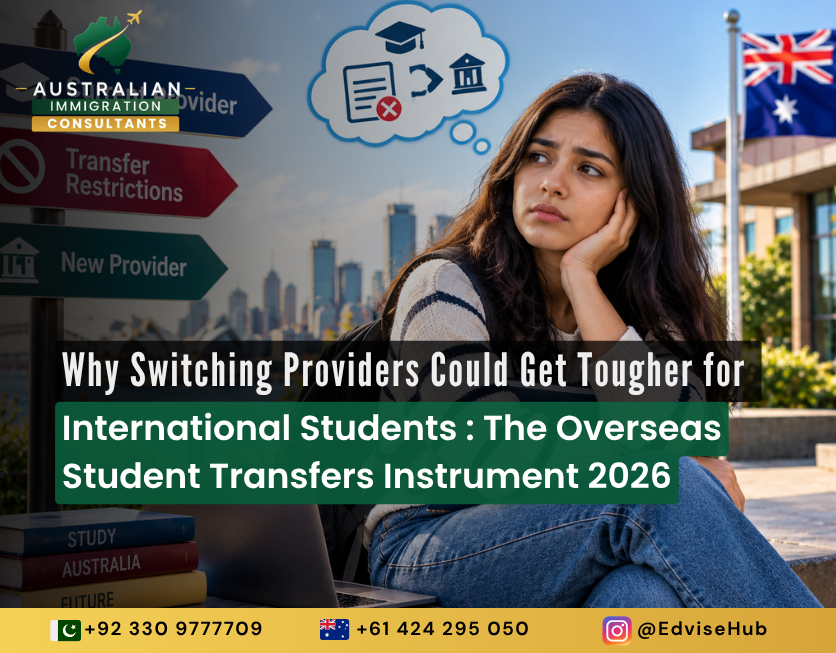
Picture a student who is four months into a course in Australia and starts to feel it isn’t the right fit. Under the old rules, they would have been about two months away from being able to move. Under the new ones, that wait has just doubled. This is the effect of the National Code of Practice for Providers of Education and Training to Overseas Students Amendment (Overseas Student Transfers) Instrument 2026, which temporarily rewrites Standard 7.1 of the National Code.
From six months to twelve, for a limited time
Until now, a registered provider could not knowingly enrol a transferring overseas student until they had completed six months of their principal course with the original (“releasing”) provider, unless an exception applied. The instrument stretches that period to twelve months for transfers made between now and 30 June 2027. From 1 July 2027, the six-month rule returns automatically. Students in the school sector are not affected and stay on six months the whole time.
A rule built to sit in front of something bigger
The longer wait makes more sense when you look at what is coming next. On 17 September 2026, the Minister for Immigration and Citizenship announced that from mid-2027 a student will need to be granted a new student visa before moving to another provider. Regulators worry that the announcement itself could set off a scramble of hurried “non-genuine” transfers, driven by visa anxiety rather than genuine academic reasons. In that kind of rush, students could end up exposed to providers more interested in filling seats than in their education. The 12-month rule is a speed bump, meant to cool things down while the larger reform is prepared.
Expert guidance tailored to your unique journey. Get a personalized roadmap from a Registered Migration Agent today.Navigate Your Migration
With Confidence.
The ways out that remain
The restriction is not absolute. New Standard 7.1A lets a transfer proceed during the restricted period in four situations:
- The current provider agrees to release the student.
- The current provider’s registration, or that of the specific course, has been cancelled.
- The regulator has sanctioned the current provider in a way that stops the student from completing their course.
- A government sponsor formally decides the move is in the student’s best interests.
There is also a fifth route outside the instrument itself. A student can leave Australia and apply for a new student visa from offshore if they want to change providers sooner.
Who agreed to it
The Department of Education consulted TEQSA and ASQA (the higher education and VET regulators), Home Affairs, and the Department of Employment and Workplace Relations, and all are reportedly supportive. The sector had also signalled support for a 12-month restriction in earlier reviews and Senate inquiry submissions, citing concerns that providers and agents were “poaching” students once they arrived onshore.
For anyone hoping to change institutions before July 2027, the practical takeaway is simple. Unless one of the exceptions above applies to you, plan for a twelve-month wait rather than six.