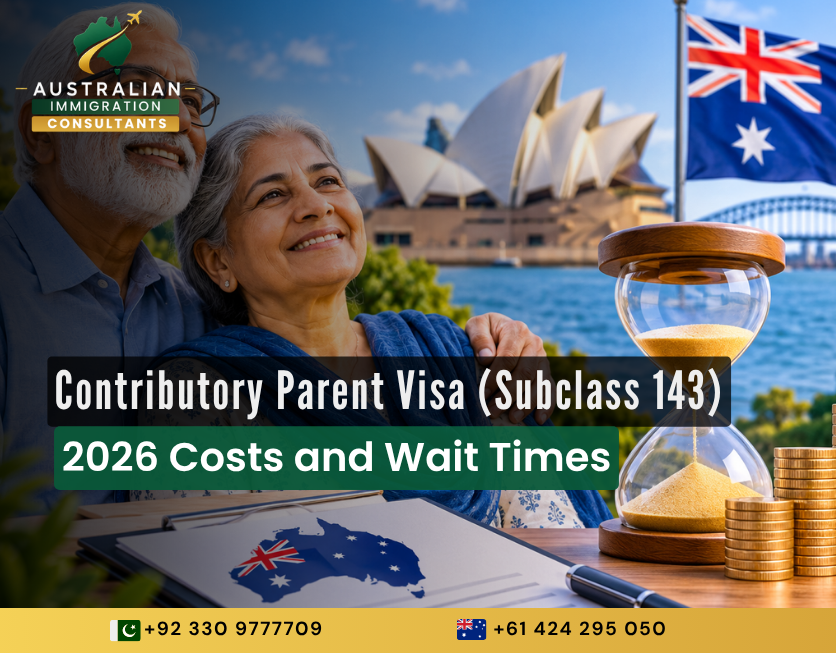
Sooner or later, most migrant families have the same conversation: when do Mum and Dad move here for good? If you’re asking whether you can bring your parents to Australia permanently, the answer is yes. The harder questions are what it costs and how long you’ll wait.
This guide covers the contributory parent visa subclass 143 using Department of Home Affairs information current as of November 2026. It doesn’t soften the numbers.
Can I bring my parents to Australia permanently?
Yes. The Contributory Parent visa (subclass 143) is a permanent visa that lets a parent of a settled Australian citizen, permanent resident or eligible New Zealand citizen move to Australia. The “contributory” part refers to a much larger second visa charge, paid in exchange for a shorter queue than the non-contributory Parent visa (subclass 103).
The core requirements are:
- Balance of family test: at least half of the parent’s children live permanently in Australia, or more of them live here than in any other single country.
- Sponsorship: an eligible child usually sponsors the parent.
- Assurance of Support: a 10-year financial guarantee, backed by a refundable bond.
- Health and character checks.
- No 870 visa: you can’t apply for the 143 if you’ve applied for or hold a Sponsored Parent (Temporary) visa (subclass 870).
Parents also apply from outside Australia.
How much does a contributory parent visa cost?
The subclass 143 visa is the most expensive visa in the parent visa Australia cost range. Home Affairs prices it from AUD $49,900 over two instalments for a single applicant. That total includes the second instalment.
Three things in that table catch people out:
- Additional charges apply at lodgement. A partner or other family member on the application pays an additional applicant charge on top of the main first instalment, so check the current amounts on the official visa page.
- The first instalment is not refunded if the application is refused. The second instalment is only requested once Home Affairs is ready to grant, so you won’t pay it and then be refused.
- The second instalment is indexed. The $43,600 is today’s figure, and what you actually pay will be whatever applies when your turn arrives.
Expert guidance tailored to your unique journey. Get a personalized roadmap from a Registered Migration Agent today.Navigate Your Migration
With Confidence.
The costs outside the visa charge
The government charge isn’t the whole budget. Plan for health examinations, police certificates from each country your parents have lived in, translations, and the Assurance of Support bond. Services Australia currently sets the bond at $10,000 for one adult and $14,000 for two, and it is refundable under the AoS conditions. Add professional fees if you use a registered agent.
How long does subclass 143 take to process?
This is the question that decides whether the visa suits your family. Home Affairs is clear that it can’t give exact processing times, because Parent visas are capped and queued. It does publish an estimate:
For new applications, the estimate for Contributory Parent visas is 18 years, compared with 42 years for Parent and Aged Parent visas.
So how long does it take to get a contributory parent visa? On the department’s current estimate, a new application lodged today could take roughly 18 years. That figure is updated yearly at the start of each program year, and it can move with planning levels, application volumes and policy changes.
The queue works in two stages. First, Home Affairs checks your application against the core criteria, including health and character. If it passes, you receive a queue date. As at 31 August 2026, Contributory Parent applications with a queue date up to November 2018 had been released for final processing.
If you lodged before 1 June 2018, your queue date is your lodgement date. For later applications, the queue date is set once the application is assessed as meeting the core criteria.
Why the wait is so long: how many contributory parent visas are granted each year?
The answer is a cap. Home Affairs explains that a limited number of permanent Parent visa places are available each Migration Program year, and once that number is reached no more visas are granted that year.
For 2026-27, the government set the Parent visa planning level at 7,060 places, down from 8,500 the year before. The 2025-26 grant instrument split that 8,500 into 6,800 contributory places and 1,700 non-contributory places. Contributory applicants therefore take most of the places in the category, but demand still far outstrips supply.
What’s the difference between the 143 and the 173?
People searching for the contributory parent visa 143 vs 173 difference are usually weighing whether a temporary visa gets a parent here sooner. The comparison below shows the key differences.
The 173 is a two-year temporary visa that can be followed by a 143 application. The catch is that it sits in the same queue as the 143, so it doesn’t get a parent to Australia sooner. Home Affairs also notes that the two-stage route costs more overall than applying directly for the 143. It mainly suits families who want to spread the payment, not families who want speed.
Is subclass 143 worth it?
It depends on what you’re buying. Here is the honest case on each side.
The case for it: Permanent residence, no visa-renewal anxiety, and a queue that is far shorter than the 42-year estimate for the non-contributory route. For families who can afford it, it is the only realistic permanent route for a parent.
The case against: The cost is high, the first instalment is non-refundable, and 18 years is a long horizon. Your parents’ ages, health and your own finances in 2040 or later all matter. Planning levels have also moved before, and nobody can guarantee the queue won’t lengthen.
Many families decide it’s worth it because it puts a parent in the queue now. They also weigh it against shorter-term options like the Sponsored Parent (Temporary) visa, though remember that holding or applying for an 870 blocks a 143 application.
How Australian Immigration Consultants can help
A parent visa is a decade-scale commitment, so the early decisions matter. Australian Immigration Consultants helps families in four practical ways:
- Checking the balance of family test before you pay anything, because failing it can’t be fixed after lodgement.
- Comparing the 143, 173, 103 and the aged-parent options against your parents’ ages and your budget.
- Preparing the application with the right health, character and Assurance of Support documents so it clears the core-criteria stage without delays.
- Managing the long queue, including change-of-circumstances updates, which are easy to miss over 18 years.
Fahad Shamim (MARN 2619225) leads the team and is happy to talk through your situation. You can reach AIC at contact@australianimmigrationconsultants.com or on +61 424 295 050.
Frequently asked questions
Can I work on a subclass 143 visa?
Yes. The 143 is a permanent visa, so holders can live, work and study in Australia, enrol in Medicare and travel in and out. Eligible holders can later apply for citizenship.
What is the cheapest parent visa for Australia?
The non-contributory Parent visa (subclass 103) has the lowest government charge, starting from $8,665. The trade-off is Home Affairs’ 42-year estimate for new applications, so “cheapest” and “fastest” are opposites in this category.
Do my parents need to be outside Australia to apply for the 143?
Yes. Parents apply from outside Australia, and applicants who hold or have applied for a subclass 870 visa can’t lodge a 143.
When do I pay the $43,600 second instalment?
Only when Home Affairs is ready to grant the visa, which on current estimates is many years after lodgement. It is payable per adult applicant, and dependent children under 18 generally don’t pay it.
Can I include both parents on one application?
Yes. Both parents can apply together, but each adult pays the second instalment, so the second-stage bill for a couple is $87,200 at today’s rates.
Do the fees change?
Yes. Visa charges are indexed each year, typically on 1 July, so always confirm current amounts on the official Home Affairs 143 page before you lodge.