Australia Migration Overhaul 2026: Key Visa Changes Explained
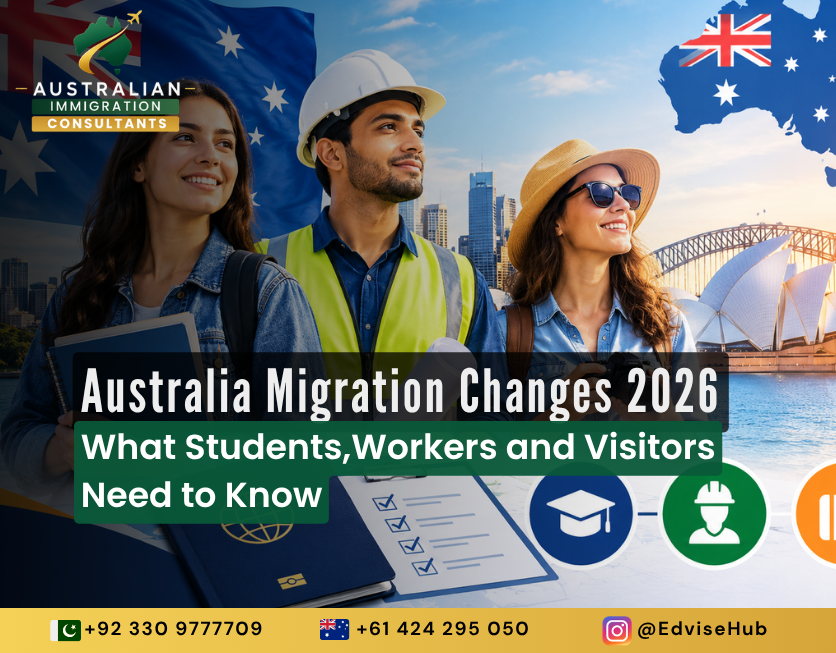
Australia is introducing a series of proposed and announced migration measures that could affect international students, working holiday makers, skilled migrants, visitors and people seeking to remain in the country through another visa pathway. The package announced by Home Affairs Minister Tony Burke on 17 September 2026 focuses on tighter visa compliance, changes to family members accompanying students, a ballot system for some working holiday makers, visitor visa restrictions and faster processing for selected in-demand occupations.
For anyone planning to study, work or migrate to Australia, the important point is that several measures still require further legislative, regulatory or administrative detail. This article summarises the information contained in the supplied briefing and separates announced policy direction from details that had not yet been finalised.
Australia Migration Numbers: The Broader Picture
The briefing reports that net overseas migration reached 292,100 in the year to March 2026, down from 299,000 in December. The migration targets referenced are 245,000 for the 2026–27 financial year and 225,000 for 2027–28. The reported post-pandemic peak was 556,000 in 2023, with net migration described as having fallen for seven consecutive quarters.
1. Working Holiday Visa: A Ballot for Second and Third Years
One of the most prominent changes is an expanded working holiday ballot. Under the announced approach, Working Holiday Makers seeking to stay for a second or third year would enter a ballot, with annual places subject to caps.
- Second-year places: 45,000 annually.
- Third-year places: 5,000 annually.
The briefing compares these figures with the previous year’s demand: approximately 57,000 people needed a second-year place, while around 31,000 applied for a third year. This means the proposed third-year cap is substantially lower than the number of applicants referenced in the briefing.
Applicants would still need to meet the existing regional work requirement. The briefing also states that UK citizens are exempt from the proposed cap because of arrangements under the Australia–UK Free Trade Agreement, allowing eligible UK citizens to remain as working holiday makers for three years without the same cap.
Expert guidance tailored to your unique journey. Get a personalized roadmap from a Registered Migration Agent today.Navigate Your Migration
With Confidence.
2. Australia Student Visa Changes: Restrictions on Dependants
International students could face tighter rules around bringing partners and children to Australia. The announced direction would restrict secondary applicants on student visas, with the briefing stating that the vast majority of international students are expected to arrive without family members.
The briefing reports that Australia issued more than 337,000 student visas in the previous year and that approximately 45,000 were issued to dependants or other family members. However, the exact exemptions by visa subclass or level of study had not been specified at the time of the briefing.
Students planning to bring a spouse, partner or children should therefore avoid relying on assumptions about future eligibility. The final rules and any exemptions should be checked before making major travel, accommodation or financial commitments.
3. Visa Hopping: Greater Restrictions on Onshore Applications
The government also announced further restrictions aimed at international students who move from one visa pathway to another while already in Australia. The measure is described as an extension of earlier reforms designed to reduce the use of onshore visa applications to extend a person’s stay beyond the original purpose of their visit or study.
The briefing notes that 2024 rules had already prevented Visitor and Temporary Graduate visa holders from applying for a Student visa while in Australia. The new direction is intended to further tighten this type of visa pathway.
4. Visitor Visa Changes: The ‘No Further Stay’ Direction
Another important announced measure concerns Visitor visas. The briefing states that every Visitor visa will carry a “no further stay” condition, with the stated purpose of ensuring visitor visas remain for genuine short-term visits rather than being used as a route to a longer stay.
For prospective international students, this is particularly relevant. A plan based on entering Australia as a visitor and then switching to a Student visa may no longer be available under the announced approach. Students should plan the correct visa pathway before travelling rather than relying on an onshore change.
5. Skilled Migration Australia: Priority for In-Demand Occupations
The migration overhaul also includes changes to processing priorities for skilled applicants. The briefing states that Ministerial Direction 119 will be updated so that applicants with skills considered important to Australia’s needs receive priority in processing.
Occupational areas specifically identified in the briefing include:
- Healthcare
- Construction
- Education and teaching
- Law enforcement
- Defence
- Resources
- Agriculture
- Aquaculture
- Fishing
The briefing notes that the broader skilled occupation list covers hundreds of professions, including occupations such as paramedics, electricians and teachers. Importantly, priority processing does not itself create eligibility for a visa. It changes the order in which applications are processed; applicants must still meet the relevant visa requirements.
6. Visa Compliance: Overstayers and Migration Agents
The announced package also places additional emphasis on visa compliance. Measures are intended to address people who remain in Australia without a valid visa and to encourage departure where a person no longer has lawful status.
The briefing also states that migration agents who knowingly support visa applications described as having no merit could face new penalties. In addition, Ministerial Direction 110, concerning character-test considerations, is expected to be updated. The briefing says these changes include measures intended to better protect child victims of crime and people affected by domestic and family violence.
7. What These Australia Immigration Changes Could Mean for Different Applicants
The practical effect will depend on each person’s visa subclass, nationality, circumstances, timing and the final legal and administrative rules. Based on the supplied briefing, the key areas to review are:
- International students: Check whether future dependant restrictions could affect plans to bring a partner or children.
- Prospective students: Avoid assuming that entering Australia on a Visitor visa can be followed by an onshore Student visa application.
- Working holiday makers: Review the proposed second- and third-year ballot and annual caps before planning a longer stay.
- Skilled migrants: Check whether your occupation falls within the areas receiving priority processing, while remembering that priority is not a visa grant.
- Current visa holders: Monitor official updates before making decisions based solely on headlines or early announcements.
- Migration applicants: Make sure applications are supported by accurate information and meet the relevant visa requirements.
Frequently Asked Questions About Australia’s 2026 Migration Changes
What are the major Australia migration changes in 2026?
The supplied briefing identifies changes involving working holiday ballots, student visa dependants, onshore visa switching, Visitor visa conditions, skilled migration processing priorities and visa compliance.
Will international students still be able to bring their families to Australia?
The announced direction would restrict secondary applicants, and the briefing says the vast majority of international students are expected to arrive without family members. Exact exemptions had not yet been detailed in the briefing.
What is the proposed working holiday visa ballot?
Working Holiday Makers seeking a second or third year would be entered into a ballot subject to annual caps. The briefing gives proposed caps of 45,000 second-year places and 5,000 third-year places.
Can I enter Australia on a Visitor visa and later apply for a Student visa?
The briefing states that the government intends to place a ‘no further stay’ condition on every Visitor visa, specifically to prevent this type of pathway. Applicants should verify the final rules before travelling.
Which occupations may receive priority in skilled migration processing?
The briefing specifically mentions healthcare, construction, education, law enforcement, defence, resources, agriculture, aquaculture and fishing, along with hundreds of professions on the broader skilled list.
Does priority processing mean my skilled visa will be approved?
No. The briefing specifically distinguishes processing priority from eligibility. Priority affects the order applications are processed; applicants must still satisfy the applicable visa requirements.
Are all of these migration changes already in force?
Not necessarily. The briefing states that several measures still required legislation or regulatory detail and that specific figures and scope could change until confirmed by the Department of Home Affairs.
What Applicants Should Do Now
Australia’s migration settings can change quickly, so applicants should base important decisions on the final rules rather than headlines or preliminary announcements. If you are planning to study, work, visit or apply for skilled migration, review your visa strategy against the latest official requirements and check whether any announced changes apply to your circumstances.
- Identify the visa pathway that matches your actual purpose for travelling to Australia.
- Check the latest official requirements before lodging an application or making major travel commitments.
- If you plan to bring family members, verify dependant eligibility and any applicable exemptions.
- If you are a working holiday maker, factor the proposed ballot and annual caps into longer-term planning.
- If you are a skilled applicant, review your occupation and the relevant processing priorities separately from visa eligibility.
- Keep evidence and application information accurate, complete and consistent.
How Australian Immigration Consultants Can Help
Australian Immigration Consultants provides immigration-focused guidance for people planning their Australian visa journey. Because the measures described in this article may be subject to further legislative or regulatory detail, applicants should obtain advice based on their individual circumstances and the rules applicable at the time of application.
Whether you are considering an Australian Student visa, skilled migration pathway, Visitor visa or another visa option, understanding the purpose of each pathway and its current requirements can help you prepare more effectively.