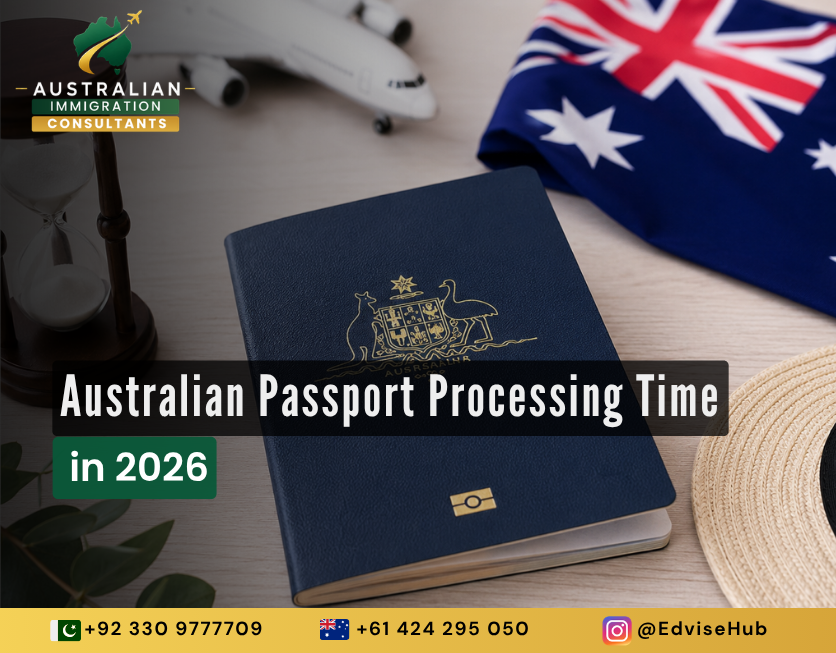
You’ve booked the flight. Maybe it’s a wedding in Dubai, a work trip to Singapore, or a long-overdue visit to family overseas. Then it hits you — your passport expired, or you’ve never had one. Suddenly, one question matters more than anything else on your itinerary: how long does it take to get an Australian passport in 2026?
The honest answer isn’t a single number. It depends on whether you’re applying for the first time, renewing, applying from inside or outside Australia, and how much you’re willing to pay to skip the queue. Below, we’ve broken down the current Australian passport processing time across every scenario, using the latest figures from the Australian Passport Office, so you can plan your trip without the last-minute panic.
The Quick Answer
If you only remember one number, remember this: allow at least six weeks. That’s the standard processing window the Australian Passport Office publishes for 2026, covering lodgement, verification, printing, and postage. Most applications with complete documentation move faster than that in practice, but six weeks is the safe planning figure for both new applications and renewals.
Here’s the breakdown at a glance:
| Service | Processing Time | Best For |
|---|---|---|
| Standard | At least 6 weeks | Most applicants with no urgent travel |
| Fast Track | 5 business days | Travel within a month |
| Priority | 2 business days | Genuine emergencies |
| Overseas applications | 6–8 weeks (sometimes longer) | Australians living abroad |
| Citizenship evidence requests | Around 16 days for 90% of cases | Citizenship-linked applications |
Now let’s unpack what actually happens behind each of these numbers.
How Long Does It Take to Get an Australian Passport in 2026?
For a first-time Australian passport, the process starts the moment your application is lodged and paid for — not when you first fill out the form online. The Australian Passport Office confirms that passport processing times can vary, but applicants should allow at least 6 weeks from lodging their application to receiving their passport, with demand increasing during peak travel periods.
First-time applicants often assume their case will take longer because there’s no existing passport record to reference. In reality, complete applications — correct photo, certified identity documents, and a properly completed referee declaration — tend to move through the system efficiently once they’re accepted for processing. The delays almost always come from missing or incorrect paperwork, not from the “first-timer” status itself.
Practical tip: if you’re applying for a child’s first passport, build in extra time. Consent documentation, birth certificates, and referee verification for minors add administrative layers that adult applications don’t have.
Expert guidance tailored to your unique journey. Get a personalized roadmap from a Registered Migration Agent today.Navigate Your Migration
With Confidence.
Australia Passport Renewal Processing Time: What’s Different in 2026
If you already hold a passport and it’s expiring, the process is more familiar — but the Australia passport renewal processing time in 2026 follows the same baseline as new applications. There’s no fast lane simply because you’ve held a passport before.
Renewal timelines currently sit at:
- Standard renewal: at least 6 weeks, sometimes stretching to 8 weeks depending on demand and completeness of documents
- Eligible adults renewing within Australia: can apply entirely online, which speeds up lodgement (not processing)
- Overseas renewals: typically 6 to 8 weeks from the date the embassy or consulate receives your application
One thing that trips people up: applying online is faster to submit, but it doesn’t change how fast the Passport Office processes your file. Online lodgement removes friction on your end; it doesn’t queue-jump you.
You can renew up to 12 months before your current passport expires, and given how tight processing windows can get during school holidays and peak travel seasons, doing exactly that is one of the smartest moves you can make in 2026.
Australia Passport Wait Time: Why It’s Not Always Six Weeks
The “6 weeks” figure is a ceiling estimate, not a guarantee — and it’s not always accurate in either direction. Real-world Australia passport wait time depends heavily on:
- Application completeness. Missing signatures, unclear photos, or incomplete referee sections send your file back into a queue for follow-up rather than approval.
- Time of year. Applications spike before school holidays and the pre-Christmas travel rush, stretching wait times across the board.
- Where you’re applying from. Domestic applications generally move faster than those lodged overseas, where mailing and identity verification add extra steps.
- Document verification needs. Name changes, character checks, or first-time applications sometimes require additional cross-agency verification, which adds time outside the Passport Office’s direct control.
The good news: recent operational improvements — better digital tools, more staff, and streamlined ID verification — have meant a large majority of standard passports are now issued within that 6-week window rather than blowing past it. But “majority” isn’t “everyone,” which is exactly why smart applicants build in a buffer.
How Fast Is Priority Passport Processing in Australia?
If your travel is genuinely urgent, the Australian Passport Office does offer expedited options — for a price.
How fast is priority passport processing in Australia? According to the Passport Office, the Priority service processes applications within 2 business days of receipt, while the Fast Track service processes applications within 5 business days. Both require that the Passport Office has received a fully completed application with all supporting documents — no shortcuts on paperwork, even for urgent cases.
Here’s the catch most people miss: priority and fast track services aren’t just about paying extra. They’re only available once your application has been accepted as complete, and — critically — Priority and Fast Track services are not available for applications submitted from outside Australia. If you’re overseas, urgent processing isn’t an option through the standard channel; you’ll need to work through your nearest embassy or consulate on a case-by-case basis.
So, can I get an Australian passport urgently? Yes — but only if you’re applying from within Australia, your documents are complete on first submission, and you’re prepared to pay the urgent-processing surcharge on top of the standard passport fee. If any part of your application is incomplete, priority processing won’t save you; the clock only starts once the Passport Office has everything it needs.
What Is the Passport Processing Time for Australians Living Overseas?
This is one of the most searched — and most misunderstood — questions in 2026, and for good reason: the rules genuinely are different offshore.
For Australians applying from abroad, expect:
- Processing time: typically 6 to 8 weeks from the date your local embassy or consulate receives your application
- No Priority or Fast Track: these expedited services simply aren’t offered for overseas lodgements
- Extra costs: overseas applications carry a surcharge on top of the standard fee to cover international processing and mailing
- Longer delivery windows: your passport has to travel from the Australian Passport Office to your embassy or consulate, then on to you — a leg that domestic applicants skip entirely
If you’re overseas and your travel plans are tight, the safest strategy is to lodge as early as possible and stay responsive to any requests for additional documentation. There’s no urgent fallback once your application is in the overseas pipeline.
Why Is My Australian Passport Application Taking So Long?
If you’re past the six-week mark and still waiting, you’re not alone — and there’s usually a specific, fixable reason. The most common culprits include:
- Incorrect or non-compliant passport photos (wrong background, sizing, or lighting)
- Missing signatures or incomplete referee declarations
- Incomplete parental consent on a child’s application
- Missing supporting evidence for a name change
- Payment not fully processed or confirmed at lodgement
- Slow response to a Passport Office request for extra documents
The Passport Office itself flags that incomplete applications, slow responses to requests for additional documents, and the time required for character and national security checks through other government agencies are the main reasons standard timeframes get extended.
If your application is delayed, here’s what to do:
- Track your application status through your online Passport Office account.
- Call the Australian Passport Office directly on 131 232 for a status update.
- Respond immediately to any information request — this is the single biggest driver of extra delay.
- If travel is imminent, ask about urgent processing eligibility (domestic applicants only).
Passport Requirements for Australian Visa Applications
Here’s where passports and immigration overlap — and why this topic matters beyond travel bookings. Almost every Australian visa application, whether it’s a skilled visa, a student visa, or a family/partner visa, requires a valid passport with sufficient remaining validity as a core supporting document. Many destination countries — and some visa categories — expect at least six months of validity beyond your intended travel or visa grant date.
This is where passport help for visa applicants Australia becomes a real, practical need rather than a side issue. If your passport is close to expiry while you’re mid-way through a visa application, timing your renewal correctly can prevent unnecessary delays to your migration pathway. Applying for your passport renewal too late — or discovering an expired passport right before a visa lodgement deadline — is a completely avoidable problem with just a bit of forward planning.
Getting the Right Guidance When Passports and Visas Overlap
Passport timing rarely exists in isolation — for most applicants, it’s tangled up with a visa deadline, a job offer, or a family reunion that can’t be pushed back. This is exactly where working with a trusted source pays off. Australian Immigration Consultants helps applicants map their passport validity against their broader visa or migration timeline, so a routine renewal doesn’t end up derailing a visa lodgement or travel plan. Getting sound guidance early — before documents are submitted rather than after a delay notice arrives — is usually what separates a smooth application from a stressful one.
Frequently Asked Questions
1. How long does an Australian passport take to process in 2026? Standard processing takes at least 6 weeks from lodgement to delivery.
2. How fast is priority passport processing in Australia? Priority processing takes 2 business days once your application is complete.
3. How long does a passport renewal take in Australia? Renewals follow the same timeline as new applications — at least 6 weeks, sometimes up to 8.
4. Can I get an Australian passport urgently? Yes, through Priority or Fast Track services, but only for applications lodged within Australia.
5. How long does it take to get a first-time Australian passport? First-time applications also take at least 6 weeks, provided all documents are complete.
6. What is the passport processing time for Australians living overseas? Overseas applications typically take 6 to 8 weeks, with no priority processing available.
7. Why is my Australian passport application taking so long? Most delays come from incomplete documents, unclear photos, or slow responses to information requests.
8. Do I need a valid passport for my Australian visa application? Yes, most visa categories require a passport with sufficient remaining validity as a core supporting document.
The Bottom Line
Passport delays are almost always preventable. Whether you’re applying for the first time, renewing before a big trip, or juggling passport timing alongside a visa application, the pattern is the same: lodge early, submit complete documentation, and respond quickly to any follow-up requests. Six weeks sounds like a long time — until you’re the one waiting on it two days before a flight.
Disclaimer: Processing times and fees are subject to change by the Australian Passport Office. Always confirm current timeframes and requirements directly at passports.gov.au before finalising travel plans.