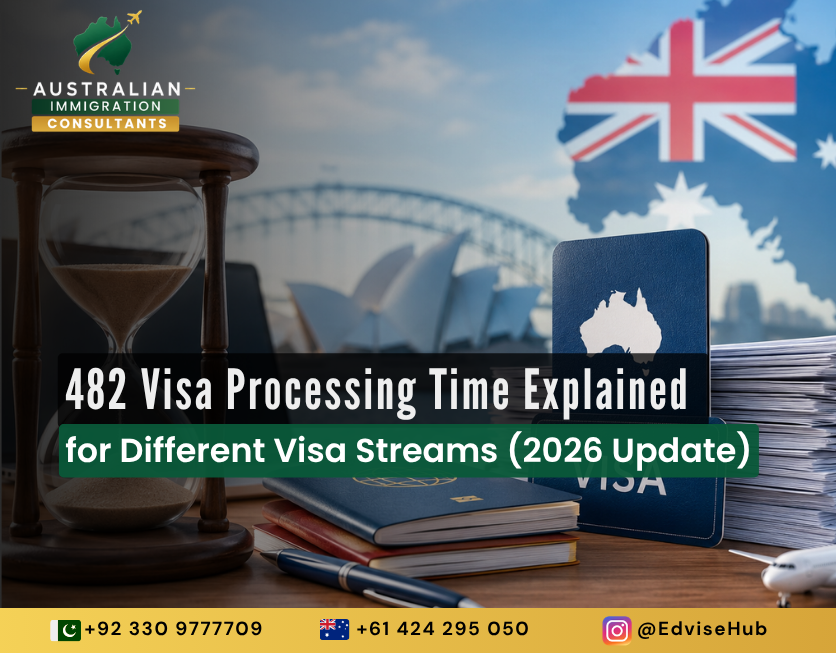
You’ve done everything right. Your employer sponsored you, your nomination is lodged, and now you’re staring at your ImmiAccount every morning wondering if today is the day. If you’re chasing an answer to “how long does the 482 visa actually take,” you’re not alone — it’s one of the most searched questions among skilled migrants right now, and the honest answer is: it depends on your stream.
The 482 visa — now officially the Skills in Demand (SID) visa — replaced the old Temporary Skill Shortage visa, and with that change came a new three-stream structure that directly affects how fast (or slow) your application moves. Let’s break down the 482 visa processing time stream by stream, so you know exactly what to expect and how to avoid becoming one of the delayed cases.
Quick Snapshot: 482 Visa Processing Time by Stream
Before we go stage by stage, here’s the short version people usually want first:
| Stream | Typical Processing Time (Visa Stage) | Priority Level |
|---|---|---|
| Specialist Skills | Days to a few weeks | Highest priority |
| Core Skills | Several weeks to months | Assessed in order of lodgement |
| Labour Agreement | Months, varies by agreement | Depends on agreement terms |
Keep in mind: these are indicative figures based on recently finalised applications, not guarantees. The Department of Home Affairs updates its official processing time guide regularly, and it’s the only source you should treat as final before making any travel or resignation plans.
482 Visa Stages Explained
A lot of the confusion around 482 visa processing time comes from people mixing up different stages of the journey. There isn’t just one clock ticking — there are actually three:
Stage 1: Sponsorship approval. Your employer applies to become an Approved Standard Business Sponsor. If they’re a first-time sponsor, this step alone can take a while, since Home Affairs verifies the business’s legitimacy and financial standing.
Stage 2: Nomination. The employer nominates your specific position, confirming your occupation, salary, and employment terms match the requirements. For Core Skills stream roles, this is also where Labour Market Testing evidence gets reviewed.
Stage 3: Visa application. This is the stage most people mean when they ask about 482 visa processing time — the period between you lodging your visa application and receiving a decision.
Understanding this 482 visa application timeline matters because delays can happen at any of the three stages, not just the final one. A perfectly quick visa decision doesn’t help much if your employer’s sponsorship approval took five months to clear first.
Skills in Demand Visa Stream Comparison
The SID visa has three distinct pathways, and choosing (or qualifying for) the right one has a real impact on your wait time.
Specialist Skills stream — Reserved for high-earning, highly skilled roles above a set salary threshold. Because the government treats this as a priority pathway, applications here are consistently the fastest-moving of the three streams, sometimes finalised in a matter of days once all supporting documents are in order.
Core Skills stream — This is where the majority of applicants sit. Your occupation must appear on the Core Skills Occupation List (CSOL), and your employer must complete Labour Market Testing before nominating you. Unlike Specialist Skills, Core Skills applications are generally assessed in the order they’re received, which means volume and queue position matter a lot here.
Labour Agreement stream — Used when an employer operates under a formal labour agreement with the Australian Government. Processing here depends heavily on the specific agreement’s terms and can run longer than the other two streams, particularly for new or less common agreements.
If you’re wondering which 482 stream is fastest, the Specialist Skills stream almost always wins — but only if your salary and occupation genuinely qualify. Trying to force an application into that stream when you don’t meet the threshold won’t speed things up; it’ll just get refused or redirected, costing you more time overall.
Why Is My 482 Visa Taking So Long?
If your application feels stuck, it’s rarely random. Here are the most common culprits behind extended waits:
- Incomplete documentation at lodgement — missing payslips, contracts, or identity documents trigger requests for more information, which pauses your case.
- Outstanding health examinations or police checks — these are often the last box ticked, and Home Affairs can’t finalise a decision until they’re in.
- Unfinished skills assessments — some occupations require a formal skills assessment before a decision can be made, and assessing bodies have their own timelines.
- Sponsorship or nomination issues — if your employer’s sponsorship or nomination hasn’t been approved yet, your visa application simply can’t progress past that point.
- Core Skills queue volume — because this stream is processed in lodgement order rather than by priority, high application volumes directly extend everyone’s wait.
- Complex case factors — additional family members, character concerns, or unusual work history can all trigger closer scrutiny.
If you’ve been waiting well beyond the published timeframe for your stream, it’s worth reviewing your ImmiAccount for any outstanding requests before assuming the worst.
482 Visa Delays 2026: What’s Actually Happening
Since the transition from the old TSS 482 framework to the Skills in Demand visa, the system has been absorbing a significant volume of applications while settling into its new structure. As a result, many applicants — particularly in the Core Skills stream — are reporting longer-than-expected waits compared to the Department’s original service standards.
The Department has publicly indicated it’s prioritising “decision-ready” applications — meaning complete, accurate, and free of missing documents — over those requiring back-and-forth correspondence. In practice, this means the gap between a well-prepared application and a rushed one has grown wider in 2026. A clean, complete lodgement genuinely moves faster than one riddled with follow-up requests.
Occupations tied to healthcare, teaching, and regional employer sponsorship are also generally seeing priority treatment under current processing arrangements, so your occupation and location can influence your place in the queue as much as your stream does.
How to Avoid Unnecessary Delays
A few practical habits make a real difference to your 482 visa application timeline:
- Complete health examinations and police clearances before or immediately after lodgement, not weeks later.
- Double-check that your nominated occupation, salary, and job description align precisely across your contract and nomination.
- Respond to any Department request for information as quickly as possible — delayed responses restart the clock on your case.
- Confirm your employer’s sponsorship status is already approved before you lodge, wherever possible.
- Get your skills assessment underway early if your occupation requires one — don’t wait for the nomination to be approved first.
How Australian Immigration Consultants Can Help
Processing times are largely in the Department’s hands, but how decision-ready your application is is entirely in yours — and that’s where expert guidance changes outcomes. The team at Australian Immigration Consultants can help with:
- Matching your occupation and salary to the correct SID stream before you lodge
- Structuring Labour Market Testing evidence correctly for Core Skills nominations
- Making sure sponsorship, nomination, and visa documentation is complete before lodgement, so applications don’t stall on avoidable requests for information
- Reviewing cases that have already been sitting longer than published timeframes suggest they should
If you’re unsure which stream you qualify for, getting a professional review early can save months of uncertainty.
Frequently Asked Questions
How long does the 482 visa take to process in 2026? It depends on your stream — Specialist Skills is fastest, Core Skills takes the longest due to queue volume.
Which 482 stream is fastest? The Specialist Skills stream, thanks to its priority processing status.
Why is my 482 visa taking so long? Usually missing documents, pending health/police checks, or Core Skills queue volume.
Does the 482 visa processing time include the nomination stage? No — sponsorship, nomination, and the visa application are assessed as three separate stages.
Can I expedite my 482 visa application? Home Affairs generally doesn’t offer individual expediting except in specific published circumstances.
Does occupation type affect 482 visa processing time? Yes — healthcare, teaching, and regional roles often receive priority handling.
Where can I check the official 482 visa processing time? Always check the Department of Home Affairs’ visa processing time guide at immi.homeaffairs.gov.au for current figures.
Final Word
The 482 visa processing time by stream ultimately comes down to which pathway you fall into and how complete your application is from day one. Specialist Skills applicants enjoy the fastest route, Core Skills applicants need patience and precision, and Labour Agreement cases depend on their specific arrangement. Whichever stream you’re in, the single biggest lever you control is submitting a clean, decision-ready application — and that’s exactly where the right guidance pays off.
Processing times referenced in this article are indicative and based on recently published departmental trends as of mid-2026. Always verify current figures on the official Department of Home Affairs website before making decisions based on expected timelines.